
Often, every day, we use a lot of products whose ingredients we don’t even know. Whether it’s the moisturiser we apply to our skin or the food on our plate, choosing the right things for both is extremely important. But did you know that many times, small chemicals present in products can fill your skin with blackheads and acne? Or that the things in the food you eat can slowly become poison for your health? I am fully confident that you probably haven’t even thought about this.
In such a situation, the “comedogenic ingredients checker” can help you. This is a tool that identifies the pore-clogging ingredients in your skincare products. Meanwhile, when it comes to food, the “ingredient checker food” or “food ingredients checker” helps you avoid processed food, harmful additives, and toxic ingredients.
In today’s article, we will learn everything about these checkers. We will also understand why it is important to “check ingredients in food” and how you can make it a part of your life.
Part One: What are Comedogenic Ingredients?
“Comedogenic” is a different kind of word, but its meaning is very simple. It refers to ingredients that block the pores of your face. When pores are blocked, oil and dirt get trapped inside, and slowly they take the form of blackheads, whiteheads, or acne (pimples).
The biggest problem is that many products say “non-comedogenic” or “oil-free” on them, yet they may contain some elements that are not good for your skin. Especially if your skin is oily or acne-prone, you need to be most careful about these things.
What is a Comedogenic Score?
Most checkers give a rating to each ingredient:
- 0: Non-comedogenic (does not clog pores)
- 1-2: Low-comedogenic (low chance of clogging pores)
- 3-4: Medium-comedogenic (possibility of clogging)
- 5: High comedogenic (high likelihood of clogging pores)
5 Most Common Comedogenic Ingredients to Avoid
- Coconut Oil: This is very popular in skincare, but its comedogenic score is very high. It can quickly clog pores.
- Lanolin: This is an ingredient derived from sheep’s wool, often found in lip balms. It is also skilled at blocking pores.
- Algae/Seaweed: It is added to keep skin hydrated, but it is comedogenic.
- Isopropyl Myristate: This is a synthetic oil that softens the skin, but it also causes acne.
- Almond Oil: This is also found in many moisturisers, but for oily skin, it can be harmful.
Part Two: How to Use a Comedogenic Ingredients Checker?
Now the question is, if we don’t remember these names, how do we check a product? For this, there are many online tools and apps available. Using them is very easy:
- Copy the ingredient list: Whatever product (like face cream, foundation, or sunscreen) you want to use, note down the full ingredient list written on its packaging or take a photo.
- Paste it into the tool: There are many free tools like “Acne Ingredient Checker” or “Pore Clogging Checker”. Paste the copied list into these.
- Submit it: As soon as you press the check button, the tool will tell you which ingredients in the list could be dangerous for your skin.
With the help of these tools, you can ensure that the product you are buying is truly safe for your skin or not.
Part Three: How to Check Ingredients in Food (Food Comedogenic Ingredients Checker)
Just as chemicals are harmful for the skin, similarly, some preservatives, artificial colours, and highly processed foods in our diet hollow out our bodies from the inside. This is where the healthy food ingredient checker or toxic ingredients checker comes in handy.
How Does a Food Ingredient Checker Work?
Nowadays, AI (artificial intelligence) has become so advanced that it can do an instant analysis of your food items. You just have to do this:
- Scan: Open your phone’s camera and take a photo of the barcode or ingredient list written on the back of the product.
- AI Analysis: As soon as you scan, the app will tell you which of the things present are harmful (toxic) and which are safe.
- See the results: The app also tells you why an ingredient is bad, such as whether it causes allergies or if it contains toxic chemicals.
These things must be searched in the food checker
- Toxic Ingredients Checker: Could it be that what you are eating contains PFAS (Forever Chemicals) or microplastics? These chemicals stay in the body for a long time and can cause diseases.
- Allergen Detection: If you are allergic to gluten or dairy, then checking the ingredients in food can be life-threatening for you.
- Processed Food Checker: Many times, the packet says “healthy”, but hidden sugars and processed oils in it can ruin your health. The food ingredient analyser shows you this hidden sugar.
Part Four: Top 3 Recommended Apps and Tools (Recommended Comedogenic Ingredients Checker)
If you want to check these things in your daily life, you should know about some excellent apps:
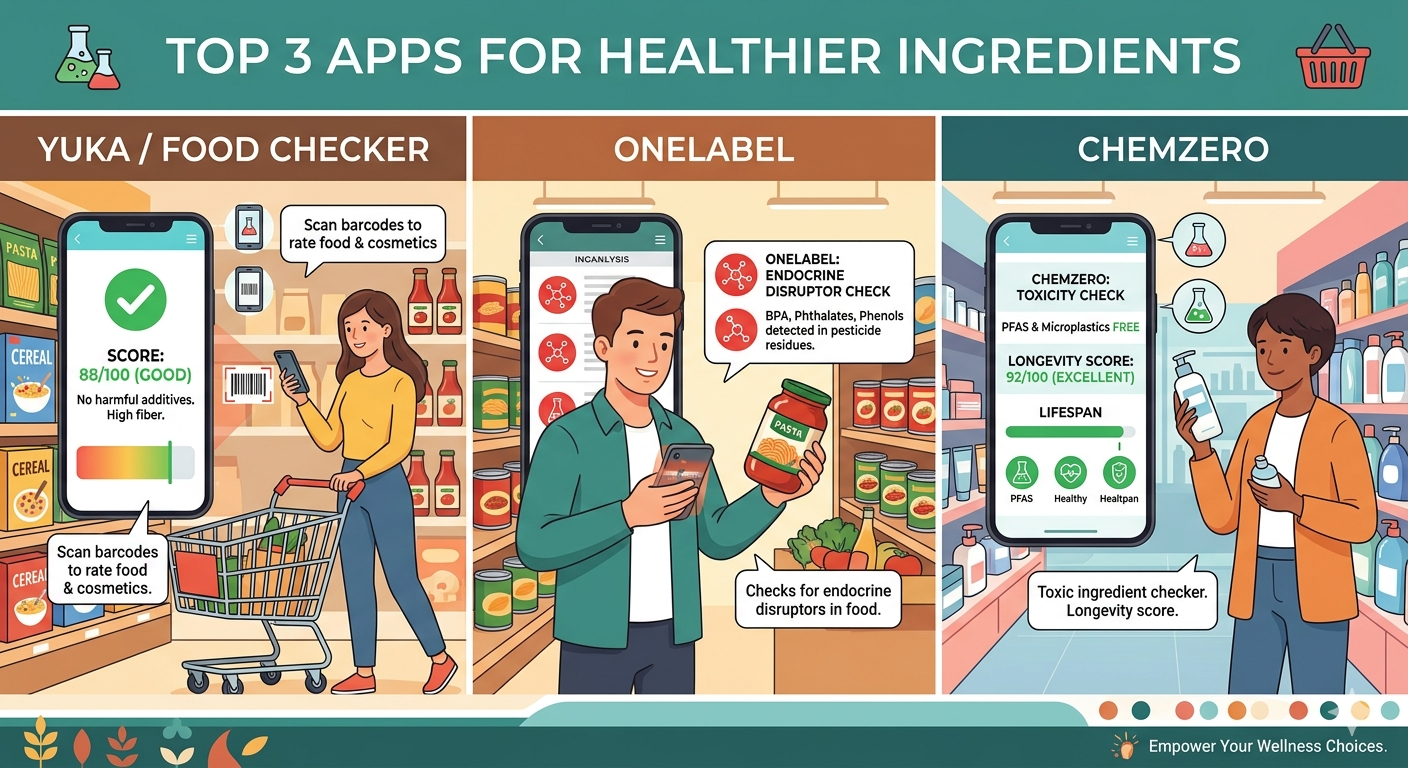
- Yuka / Food Checker: This is a very popular app. It scans barcodes and rates both food and cosmetics on a score from 1 to 100. It also tells you what is wrong with the product.
- OneLabel: This app tells you whether your food contains endocrine disruptors (chemicals that mess up hormones). It is one of the best options for checking food ingredients.
- ChemZero: If you want to avoid the most toxic things (PFAS and microplastics), then this toxic ingredient checker is the best. It gives a longevity score on how this product will affect your lifespan.
Part Five: Why Should You Use These Tools? (Benefits)
- Correct information: Don’t fall for claims like “100% natural” or “herbal” written on products. Tools tell you the reality.
- Saving money: It’s better to check whether a product is right for you than to buy the wrong one and throw it away.
- Health protection: Consuming or applying toxic substances for a long time can cause cancer, hormonal imbalance, and skin problems. The food product ingredient checker protects you from these risks.
Conclusion (Conclusion)
After reading this research and article, I hope you will have understood that the “Comedogenic Ingredients Checker” and “food ingredients checker” are not just hobbies but a necessity today. Whether you are buying a skincare product or packaged noodles, scanning its ingredients once will be the best step for your health.
Now, next time you go to the market, don’t buy anything without checking. Try using food with comedogenic ingredients. Check it with a food ingredient analyser app once. You will see the difference yourself.
Disclaimer: This information is for educational purposes only. Before starting any new skincare product or making changes to your diet, be sure to consult a doctor or dermatologist.