
When we look at a product before buying it, what do we think? On a small label of some snack bar, what is “sodium benzoate” or “red 40 lake” after all? You are not alone. Thousands of additives, preservatives, and hidden sugars are present in packaged foods. Knowing how to check ingredients in food has become an essential part of life. But for this, a trustworthy product ingredient checker comes into play.
You will find the answer to such a question in this article: how to use an ingredient checker food tool, why reading the label is important, and which toxic ingredients to avoid. By the end, you will be able to scan any packet and make healthy choices.
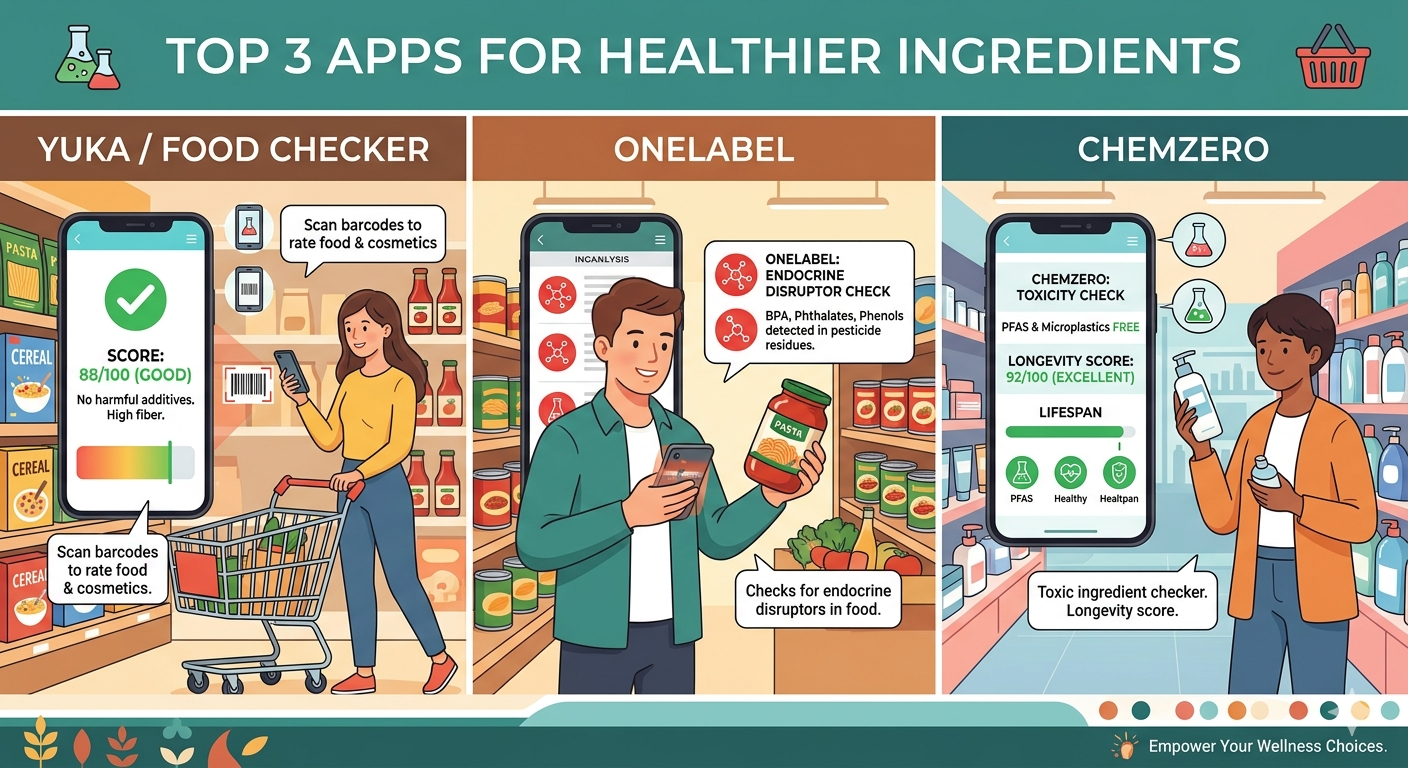
After all, why do you need a food ingredients checker?
Most of us think that if a product is on a store shelf, it must be safe. But that is not always true. Many common food items contain artificial colours, chemical preservatives, and hidden sugars that are linked to inflammation, hormonal issues, and diseases. A dedicated food ingredients checker saves you from marketing deception.
Using an ingredients checker food tool is like having a nutritionist in your pocket. You simply scan the barcode or type the product name, and within seconds, you get information about every ingredient.
What is a Product Ingredient Checker?
A food ingredient checker is any such tool – whether a website, mobile app, or manual checklist – that analyses the components of packaged food. Even though you can read the label yourself, a digital checker goes one step further. It compares against a database of harmful substances, allergens, and controversial additives.
For example, if you want to check ingredients in food for hidden MSG or artificial sweeteners, a good checker will show them in red and explain why they are harmful. This saves you from having to remember chemical names.
Different Types of Ingredient Checkers
- Mobile apps – Scan barcodes in real time.
- Browser extensions – Check ingredients while shopping online.
- Manual databases – Search by product name or ingredient list.
- DIY method – Use a printed list of “bad” ingredients and cross-check.
How to Use a Food Product Ingredient Checker
Let’s be practical. Here is a step-by-step method to use any food product ingredient checker effectively.
Step 1: Choose Your Tool
Popular options include Yuka, Think Dirty, EWG’s Food Scores, and Bobby Approved. Each works slightly differently, but all serve as a product ingredient checker for everyday use. I personally use Yuka because it gives a clear 0–100 score and explains each additive.
Step 2: Scan or Search
Open the app and scan the barcode on any packaged food. If you don’t have a barcode, you can manually type the product name. The ingredient list checker food feature will then pull up a complete report.
Step 3: Review the Alerts
Pay special attention to ingredients flagged as “high risk” or “moderate risk”. Common offenders include:
- Artificial colours (Yellow 5, Red 40)
- Preservatives like BHA, BHT, and sodium nitrite
- Carrageenan (linked to digestive issues)
- High-fructose corn syrup
- Potassium bromate
Step 4: Compare Alternatives
The best tools also suggest similar products with cleaner ingredients. This is where a healthy food ingredient checker truly shines—it helps you swap unhealthy choices for better ones without sacrificing taste.
The Rise of the Healthy Food Ingredient Checker
More Americans are moving toward clean eating. They want real food with names they can pronounce. That is why the healthy food ingredient checker category has exploded. These tools don’t just spot toxins; they also look for beneficial nutrients, fibre content, and protein quality.
A good, healthy Product Ingredient Checker will reward whole foods like oats, nuts, and seeds while penalising highly processed items. Some even integrate with your diet goals, such as low-sodium or keto.
Toxic Ingredients You Must Look For
While every toxic ingredients checker will have its own list, here are the top five ingredients that should never be in your food.
1. Artificial Food Dyes
Yellow 5, Red 40, Blue 1 – all linked to behavioural issues in children and potential cancer risks. Use a toxic ingredient checker to spot these quickly.
2. Partially Hydrogenated Oils (Trans Fats)
Even if a label says “0g trans fat”, small amounts may still exist. Your ingredient checker food tool will flag words like “partially hydrogenated”.
3. Sodium Nitrite / Nitrate
Found in deli meats, bacon, and hot dogs. Linked to colorectal cancer. Always check the ingredients in food that comes from a deli counter.
4. BHA and BHT
Used to preserve fats and oils. Both are considered possible human carcinogens. A reliable food ingredient checker will highlight them instantly.
5. Potassium Bromate
Added to breads to strengthen dough. It is banned in many countries but still legal in the US. Do not rely on looks alone—always use an ingredient list checker for food before buying bread.
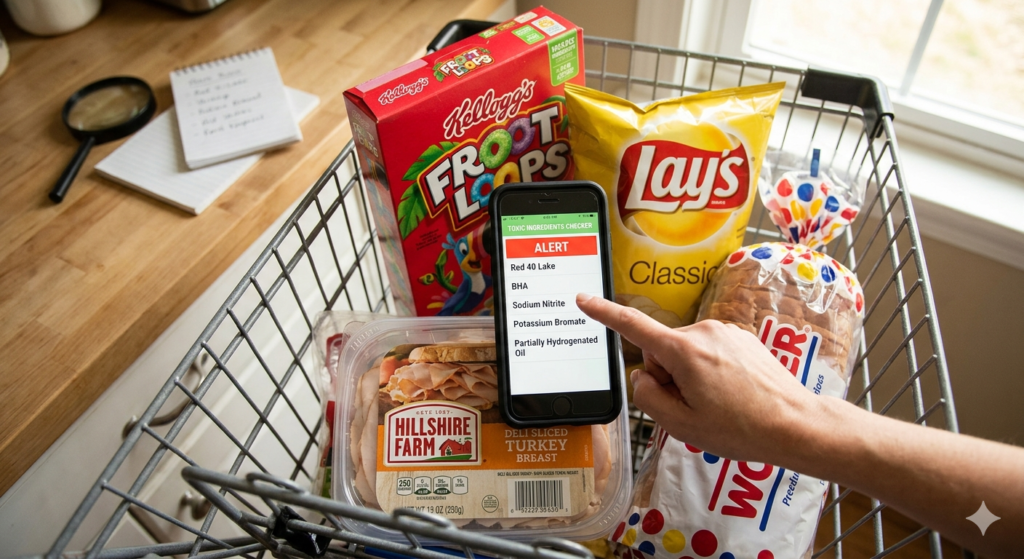
How to Check Ingredients in Food Without an App
Sometimes you don’t have your phone or an internet connection. You can still check ingredients in food manually. Here is a quick rule of thumb:
- Short list is better – If the ingredient list has more than 5 lines, be suspicious.
- Avoid anything you can’t pronounce – This is not a perfect rule, but it helps.
- Look for sugar aliases – Cane juice, dextrose, maltose, and corn syrup are all sugars.
- Watch for “natural flavors” – This term can hide hundreds of chemicals.
Following this manual method works as a basic check for ingredients in the food strategy. But for serious health goals, I strongly recommend a digital tool.
Best Practices for Using an Ingredient List Checker Food Tool
To get the most out of any ingredient list checker food tool, follow these tips.
- Scan every new product – even from brands you trust. Recipes change.
- Don’t rely on front labels – “natural” and “healthy” are not regulated terms.
- Check serving sizes – Sometimes a product looks clean, but only for a tiny serving.
- Re-scan your favourites every few months – formulations vary.
Why You Should Check Ingredients in Food Even If You’re Healthy
Maybe you exercise regularly and maintain a normal weight. That is great, but internal health matters too. Chronic low-grade inflammation from additives like carrageenan or polysorbate 80 can lead to gut issues, skin problems, and fatigue. Regularly using a food product ingredient checker ensures you are not slowly damaging your body without realising it.
I have personally helped friends switch to cleaner peanut butters and yoghurts simply by scanning their usual brands. The results? Better digestion, clearer skin, and more energy. That is the power of knowledge.
Real-Life Example: Scanning a Granola Bar
Let me walk you through a real scan. Last week, I used a product ingredient checker on a popular “healthy” granola bar. The front label said “whole grains” and “good source of fibre”. But my ingredients checker flagged the following:
- Soy lecithin (moderate risk – possible GMO)
- Natural flavours (unknown source)
- Sugar is the second ingredient
The app gave it a 28/100 and recommended a different bar with only four ingredients: oats, dates, almonds, and sea salt. That is why you never trust the front of the box.
Can a Toxic Ingredients Checker Help With Allergies?
Absolutely. If you or your child has a food allergy, a toxic ingredients checker is invaluable. While most of these tools focus on chemical additives, many also let you filter for common allergens like gluten, dairy, soy, and nuts. You can even set up alerts. For example, every time you scan a product, the app will warn you if it contains traces of peanuts.
The Future of Food Transparency
We are moving toward a world where every ingredient will be transparently scored. Already, several grocery chains are integrating a food ingredients checker directly into their apps. Soon, you might not need a separate tool at all. But until then, taking responsibility for what you eat is the smartest thing you can do.
Conclusion: Start Checking Today
You don’t need a degree in chemistry to eat well. You just need a simple routine: pick a product ingredient checker, use it every time you shop, and pay attention to the red flags. Whether you choose a mobile app or a manual ingredient list checker, the important thing is to start.
Remember, every time you check ingredients in food, you vote with your wallet. Companies notice when sales drop for products filled with artificial junk. By becoming a conscious consumer, you protect your health and push the entire food industry toward cleaner, safer options.
So next time you reach for that colourful cereal box or flavoured yoghurt, stop. Open your healthy food ingredient checker, scan the barcode, and see the truth. Your body will thank you.